

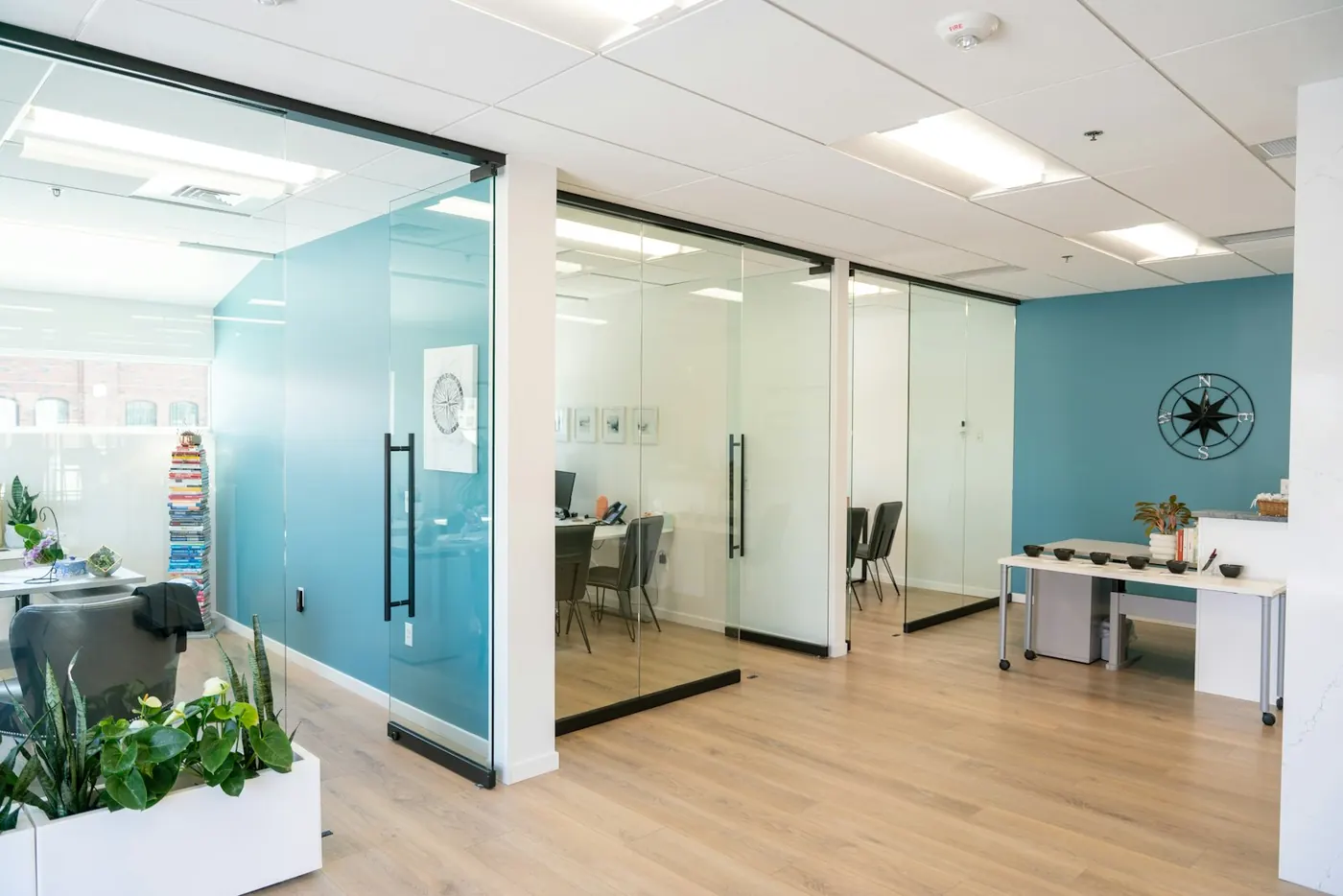
1. Start with how each room is used
List every enclosed space and decide how private it needs to be: open and bright, muffled, or confidential. That single decision drives the choice between single and double glaze, the door specification and how the ceiling void is treated. Our guide to single and double glaze covers this in detail.
2. Understand the site
- Floor: levelness affects how the bottom track sits and seals.
- Ceiling: height, type and what's in the void above. Decide whether partitions stop at the ceiling or go up to the slab.
- Existing walls and columns: where glass will meet them, and how those junctions are finished (for example with a Shadowline detail).
3. Check building requirements early
- Most commercial buildings require fit-out plans to be approved by building management before works start. Ask for the building's fit-out guidelines.
- Check whether any partition forms part of a fire-rated separation. Standard glass partitions are not fire-rated, so your designer or main contractor should confirm this.
4. Coordinate with M&E
- Sprinklers, air-conditioning diffusers and lights shouldn't end up straddling a new wall.
- Enclosed rooms need their own air supply and return, or they get stuffy quickly.
- Plan switches, power and data points before the glass goes in. There's nowhere to hide cables in a glass wall.
5. Think about safety and privacy
- Use safety glass (toughened or laminated) appropriate to the application.
- Add manifestation, the markings at eye level that stop people walking into clear glass. It's also a chance to bring in branding.
- Use frosted film or patterned bands where people need visual privacy without losing light.
6. Choose finishes and hardware
- Frame colour and profile: centred, offset or seamless glazing.
- Door type, handles, locks and access control. Fix these before the glass is ordered.
- Junction details such as Shadowline for a flush finish against drywall.
7. Plan the programme and handover
- Allow for site measurement and fabrication before installation.
- Install glass after dusty trades where possible, to protect it.
- At handover, check door operation, seals, alignment and manifestation, and confirm who to call for adjustments.