

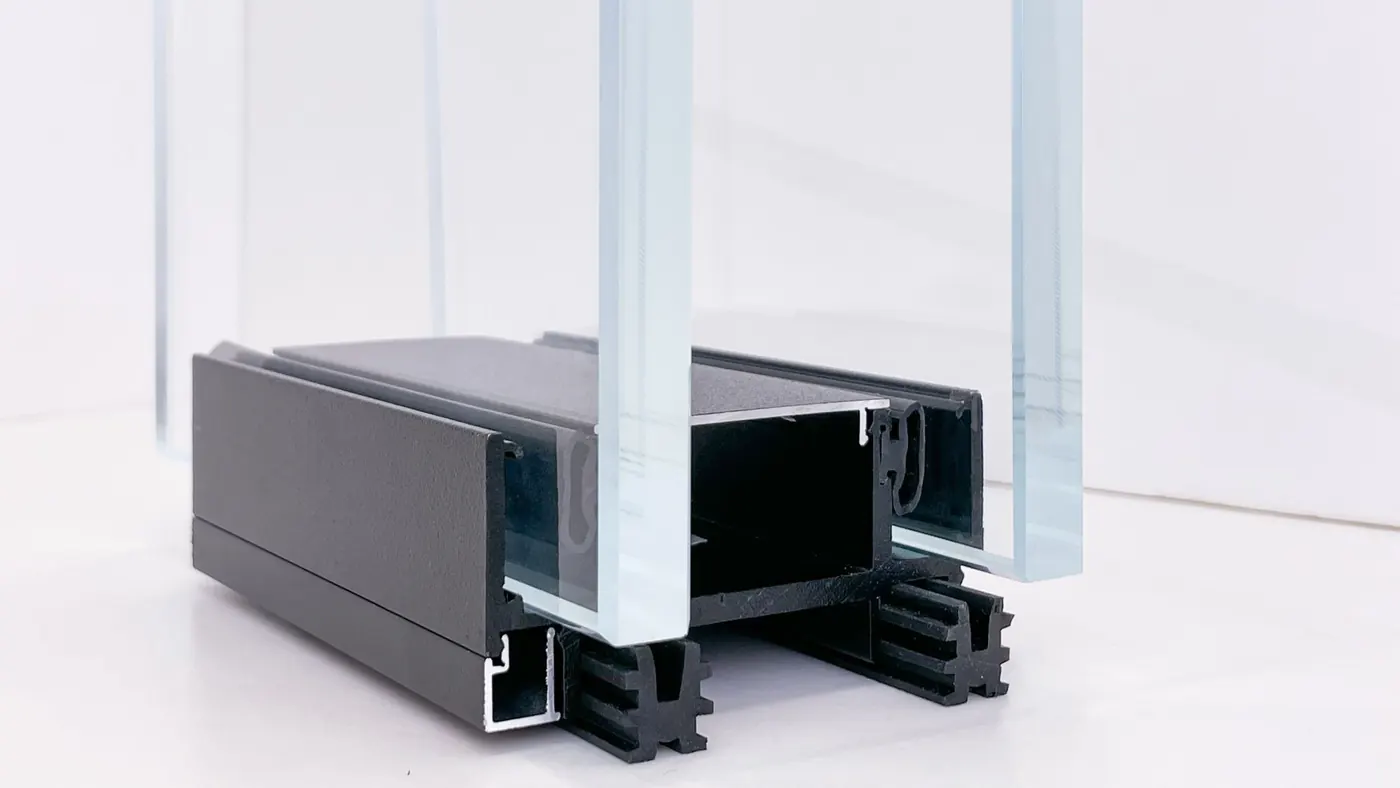
How sound gets through a glass wall
Sound doesn't only pass through the glass. In a real office it takes every route it can find:
- Through the glass, which is what single and double glazing mainly address.
- Through the frame and joints, where gaps and poorly sealed junctions let sound leak.
- Around the partition. Sound travels over the top through the ceiling void, under and around the door, and along continuous floors and walls. Acousticians call this flanking.
A partition performs only as well as its weakest path. An excellent double glazed wall with an unsealed door or an open ceiling void above it will not perform like an excellent wall.
What an STC rating tells you
STC (Sound Transmission Class) is a single number describing how well a partition reduces airborne sound, measured under laboratory conditions. Higher is better. A commonly quoted guide to what you'd hear through a wall:
| STC | What you'd typically hear next door |
|---|---|
| 25 | Normal speech can be understood quite easily |
| 30 | Loud speech can be understood fairly well |
| 35 | Loud speech is audible but hard to make out |
| 40 | Loud speech is heard only as a murmur |
| 45 | Loud speech is barely audible |
| 50+ | Loud speech is essentially inaudible |
Two cautions. First, lab ratings are measured on the partition alone; installed performance is usually lower once doors, junctions and the ceiling void are involved. Second, background noise matters: the same wall feels more private on a busy floor than in a silent one.
When single glaze is the right call
Single glazed partitions use one pane in a slim aluminium frame. They suit:
- Zoning an open-plan floor while keeping it bright
- Everyday meeting rooms and huddle spaces
- Private offices where the aim is focus rather than confidentiality
Laminated acoustic glass, which has a sound-damping interlayer, can lift the performance of a single pane noticeably without changing the look.
When to choose double glaze
Double glazed partitions use two panes separated by a cavity, which blocks considerably more sound. Choose double glaze for:
- Boardrooms and rooms where confidential matters are discussed (HR, finance, legal)
- Rooms beside noisy areas such as pantries, open workspaces or reception
- Rooms used heavily for video calls, where people tend to speak louder
Whichever you choose, get these right
- The door: perimeter seals and a drop seal at the bottom. An unsealed door can undo the rest of the wall.
- The ceiling void: if the partition stops at a suspended ceiling, sound can pass over it. A barrier above the partition closes that path.
- Junctions: where glass meets walls, columns and the floor, joints need to be sealed properly.